Lessons from Hong Kong’s Pollution Struggle for Bangladesh
Breathing in Poison
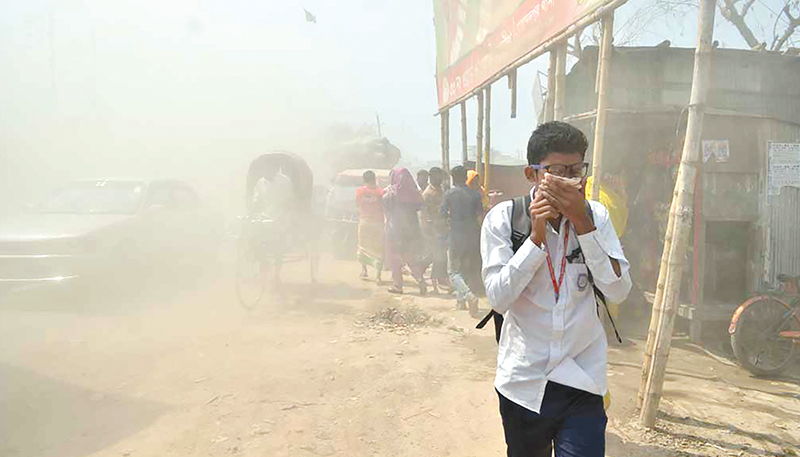

Air pollution is no longer an invisible enemy—it has become an everyday reality shaping the health and environment of millions worldwide. Hong Kong, despite its modern infrastructure, continues to struggle with both street-level pollution and cross-boundary smog, while Bangladesh’s major urban hubs—Dhaka and Chattogram—face almost identical challenges, magnified by rapid urbanization and weak regulatory enforcement.
Hong Kong’s Double Burden
Hong Kong’s Environmental Protection Department (EPD) reported that in 2022, road transport alone contributed around 250 tonnes of PM₂.₅ and 280 tonnes of PM₁₀, making up 11% and 13% of total emissions respectively. Research using positive matrix factorization revealed that diesel vehicles are responsible for a staggering 70–90% of roadside PM₂.₅ emissions, underscoring their dominance in the city’s smog crisis.
Adding to the problem, cross-boundary pollution from the Pearl River Delta fuels recurrent haze episodes, leaving Hong Kong caught in a cycle of both local and regional air quality degradation.
Dhaka and Chattogram: A Mirror Image
Bangladesh’s megacities face strikingly similar realities. Outdated diesel-powered buses, trucks, and construction machinery dominate urban roads, releasing clouds of particulate matter (PM₂.₅) and nitrogen oxides (NOₓ). Combined with industrial emissions, rampant construction dust, and unregulated waste burning, these pollutants trap millions of residents in a toxic atmosphere.
Dhaka consistently ranks among the world’s most polluted cities, where researchers equate a day of breathing to smoking multiple cigarettes. The dry winter months further intensify smog as cross-boundary pollution worsens regional haze.
Health and Environmental Consequences
The toll is devastating. Long-term exposure to PM₂.₅ and PM₁₀ leads to chronic respiratory diseases, cardiovascular complications, stroke, and premature deaths. Children, the elderly, and outdoor workers remain the most vulnerable—many suffering from asthma, bronchitis, and reduced lung capacity at alarming rates.
The damage does not stop at human health. Polluted air hampers photosynthesis, lowers agricultural yields, corrodes infrastructure, and accelerates acid rain contamination. For coastal Bangladesh—already battling rising seas and salinity—air pollution further intensifies climate vulnerability, worsening heat islands and greenhouse gas concentrations.
Lessons and Solutions
Hong Kong’s partial progress offers lessons: phasing out diesel minibuses, stricter vehicle emission standards, and incentives for electric public transport have slowly reduced pollution levels.
For Bangladesh, the roadmap is clear:
-
Cleaner fuels and vehicle upgrades to replace outdated diesel fleets
-
Modernizing brick kilns and regulating factories to curb unchecked emissions
-
Incentives for electric and hybrid transport
-
Public engagement campaigns to discourage waste burning and encourage sustainable practices
The Path Forward
Air pollution is not just about urban beautification—it is a fight for survival. Without decisive action, Dhaka and Chattogram risk sacrificing both public health and economic productivity of future generations. Declaring pollution a public health emergency and learning from regional examples like Hong Kong could help Bangladesh chart a sustainable path toward healthier skies and more livable cities.
Writer: Dawood Arman
Activist
Email: dawood.kw19@gmail.com
সংবাদটি আপনার বন্ধুদের সাথে শেয়ার করুন
গুরুত্বপূর্ণ এই সংবাদটি অন্যদের জানাতে সোশ্যাল মিডিয়ায় শেয়ার করুন।